Thursday, 19 November 2026

The Quiet Strength of Men

During a training session on managing situations through emotional intelligence, I asked the men and women in the room to list their strengths. The women began writing. They named their abilities with confidence. The men hesitated. Some struggled to identify their strengths; others seemed reluctant to acknowledge them. That moment stayed with me. It made me wonder how early we teach boys to be strong - but not to speak about their strength. To provide, protect and persevere, but not to ask for support. To feel deeply, perhaps, but never let it show.

Thankfully, that story is changing. Today’s boys and men are increasingly learning to know their priorities and to understand that caring for themselves matters, too. I see this change close to home. I have two sons and I love the way their generation is learning to question the old stereotypes society has placed on men. They are discovering that strength need not mean silence, that ambition can coexist with tenderness and that caring for others begins with allowing yourself to be cared for.

When I look back across generations, I can also see how difficult it must have been for many of the men who shaped my life. My grandfather was an army man who fought in the World War. My father served in the Navy as a marine commando, training naval divers and commandos. My brother became a first-generation entrepreneur in the maritime industry and my husband is a master mariner. I have seen, up close, both the demands and the rewards of their lives and professions. As the years pass, I find myself noticing more their sacrifices, their choices and all the things they carried without making a show of it.
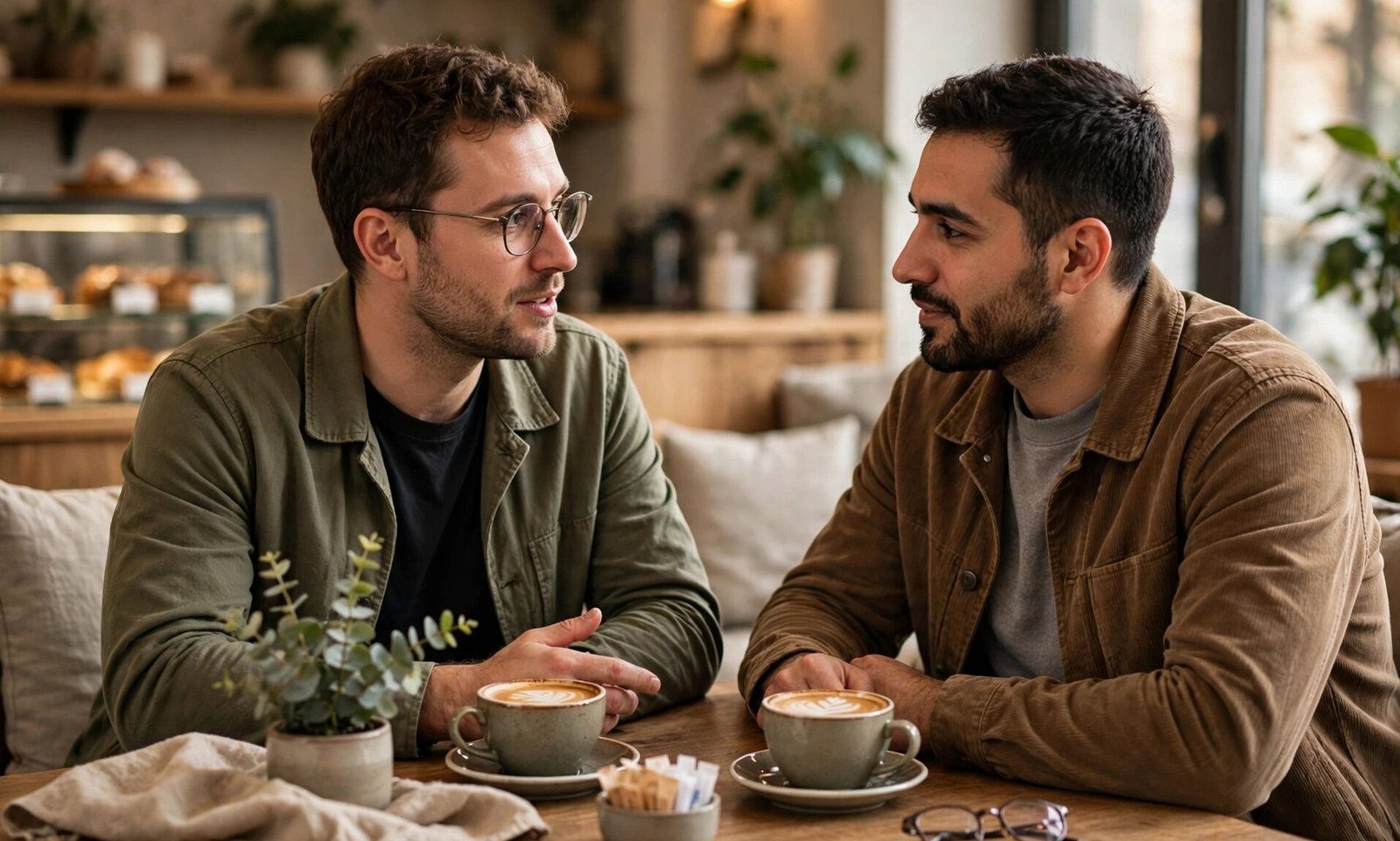
And it isn’t only the men in my family. In my circle of friends, colleagues and loved ones, I have met men with stories of courage, tenderness, ambition and resilience. We don’t need to look only to celebrities or public figures for examples of strength. Often, it is the everyday men around us who show it most quietly: the colleague who keeps going through a hard season, the father who makes time to listen, the partner who shares the load, the friend who shows up when it matters.

“Not all strength makes a sound. Some of it looks like showing up, day after day, for the people you love.”

Men across every walk of life carry responsibilities in different ways; from the labourer who works tirelessly through the day, to the middle-class provider building a future for his family, to the leader whose long hours may come at the cost of his own health and wellbeing. Behind every role is a person, with hopes, worries and a story that may rarely be told.

I feel privileged when people trust me with their journeys. Each one reminds me that strength is not a single thing. It can be discipline, kindness, courage, patience or the willingness to admit, “I need help.” And when we make space to hear men’s stories without judgement, we make it easier for them to be fully human, not just endlessly capable.

“When we acknowledge someone’s effort, we remind them that they are seen; not only for what they do, but for who they are.”

I am often described as a feminist. I’m not sure that is the word I would choose for myself, but I have always been a strong advocate for diversity, equity and inclusion. My doctoral research explored women’s career aspirations in my industry, and I have spent nearly three decades building a career of my own.

Looking back, I recognise how fortunate I have been. I had the freedom to choose what I wanted to study, pursue a career in my chosen field, build a family and raise children. I never felt solely responsible for providing for my family or managing its finances. My father believed in me and respected my choices and my husband has done the same, in fact much more as I am his life partner, a friend and confidante. I believe thats been the story of many women.

When I look at the men around me - family, friends and colleagues; I realise that many have not had the same freedom from expectations. From an early age, they are often expected to provide, protect and have answers to every problem. Those expectations can become a heavy burden. That burden may be just one part of a much more complex picture of men’s health, but it deserves to be acknowledged alongside the many other factors that affect their wellbeing.
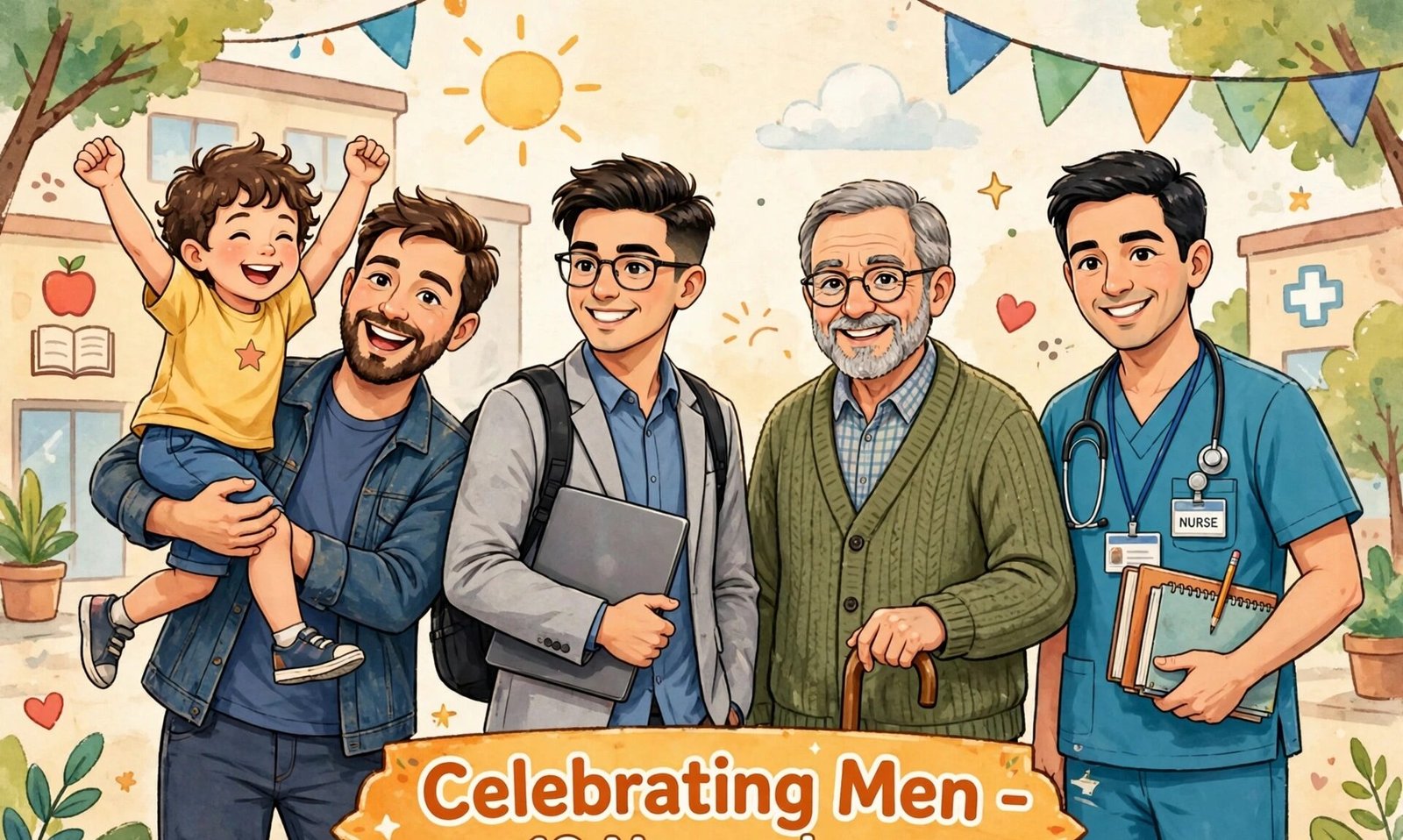
None of this is to suggest that women do not face struggles of their own. They do. But men, too, need space to speak openly about what they carry. Too often, they are taught that showing vulnerability is a sign of weakness and that “boys don’t cry.” It is time to let go of that idea. Human beings have emotions, and everyone should be free to express them without shame.

Men and women, with their different experiences and strengths, help make our world complete and beautiful. Let’s build a world where everyone can grow and excel and where no one has to hide their feelings to be accepted. For me, strong men have helped build strong women - not by standing above them, but by standing beside them as fathers, brothers, partners and colleagues. Rather than striving to be the same, men and women can work towards becoming thoughtful collaborators; sharing responsibility, respecting one another and building better teams at home and at work. This day is an invitation to do just that: to listen, to appreciate and to make room for every part of the person behind the role.

To the men who keep showing up, caring, building and growing and to the boys becoming men in their own way’ thank you! Your stories matter. Your wellbeing matters. You matter!

Happy International Men’s Day.

Sunday, 1 November 2026

My Karwa Chauth


And No, I Don’t Need Your Certificate of Feminism

Every October, two types of people become active: first, women who celebrate Karwa Chauth with joy; and second, a handful of privileged influencers and celebrities who try to shame them for doing so. 

This year, it’s Twinkle Khanna saying, “These days, by 40, you could be on your way to your second marriage, so what’s the point of fasting? You don’t need men to last that long anymore.” 

Before that, it was Ms. De calling Karwa Chauth regressive—a ritual for insecure women with nothing better to do. She even called it “Karwa Ch*t.” A woman of her age, an author we all grew up reading, saying such a thing was a shock to me. Both women are well read and well educated, and they have large followings.

Let me tell you my story. 


I started fasting on my own. My husband told me very clearly on day one, “Please do what you want to do. Mom might ask you, but it’s your choice whether you follow any rituals or not.” This wasn’t just about Karwa Chauth; it applied to all the festivals and rituals followed at my in laws’ home. I will always respect him for putting me ahead of himself. 

I was not forced. I was not brainwashed. I was asked to choose what I wanted to do. I am grateful for that and I value it. My mother in law took care of everything, as she understood the difficulties of being a career woman and a new mom. In fact, my in laws played a huge part in raising my two boys. They literally helped raise me, too. I learned what it meant to run a home and a family from my mother in law. This happens with almost all women, but many choose not to acknowledge it in the name of individuality or freedom - call it whatever you like. 

I am an educated woman and a feminist. They say education opens people’s minds. I guess I worked on that part - jokes apart, I have two undergraduate degrees, two postgraduate degrees, and a PhD. I founded Indian Women in Hospitality. I have spent my entire life advocating for DEI and for women’s right to work, lead, earn and speak. I have been working for almost three decades.

And I KEEP Karwa Chauth. By choice. So please, don’t tell me it’s regressive. 

The problem with these so called influencers; and what irritates me - is their sheer disconnect from ground reality. They live hugely privileged lives, with a battery of servants at home and PR teams to write their thoughts. Some are school dropouts who have never had to struggle for a day in their lives.

And then they sit in their penthouses and preach to women around them and to women in small towns - about what empowerment means. 

By the way, who reads their thoughts? Maybe thousands or even lakhs of people on social media. Do you think the women in our villages and small towns follow them? They don’t. 

I have seen women in villages on Karwa Chauth. Do you know what that day means to them? It is the ONE day they get to care for themselves.

They get to dress up like brides again. They get to wear new bangles, apply mehendi, and wear new sarees or beautiful lehengas. They get to enjoy themselves with other women - to laugh, sing, gossip and bond. For a few hours, they are not someone’s daughter in law, mother or wife who is cooking and cleaning. They are just themselves: beautiful, happy women celebrating together. Praying together. 

You want to take that away from them and mock them; and call it feminism? What is the harm? What is the harm if a woman wants to pray for her husband’s long life? Everything we do is based on a belief system. Even God is a belief. 

To Ms. Khanna and Ms. De: Let’s Be Honest

Saying that by 40 you could be on your second marriage, so there’s no point in fasting, trivializes marriage itself. Commitment is not a joke. The fact that second marriages exist doesn’t mean first vows are worthless. If anything, it proves how much we value companionship. Even if you are divorced, would you wish something bad for the other person? 

And calling women who fast insecure is easy when you have never lived the life of an ordinary Indian woman. Insecurity is not fasting. Insecurity is needing to mock other women to stay relevant. I am married to a seafarer; he is hardly ever home when I fast, but it’s one beautiful bond I share with my husband. I know he is often far away, across time zones and we can’t even speak. But that’s the beauty of love, trust and care. 

My feminism does not ask me to hate men. My feminism does not ask me to mock other women. My feminism allows me to be strong at work and soft at home, to lead a boardroom and also fast for the man I love. Both can coexist.We don’t need men to pay our bills. We want our husbands to live healthy lives. We can survive on our own. We have built our own careers and livelihoods. 

I fast because I pray for him and for us. Because I love him. Because we built a family together. Because love is not a transaction based on need; it is a choice of the heart. 

Just three days after Karwa Chauth is Ahoi Ashtami, when women fast for their children not just their sons (as it was followed earlier), but their daughters too. This is a beautiful adaptation. 

It’s not a hard and fast rule; it’s a choice women make. If they can’t fast for health reasons, they perform ‘udyapan’. Many have water after reciting the katha. Women don’t observe the fast when they are pregnant or lactating. They also choose to adapt the ritual to suit their needs and what they can do comfortably. It’s not forced. 

Karwa Chauth is also not necessarily like what Karan Johar made it look like in his movies. We sometimes dramatize our rituals too much. It falls on Chaturthi, and many people fast for Ganeshji. Some fast only until noon; there are different variations. 

I have two sons, and when they get married, my daughters in law will have the same freedom to choose what they want to do.

Let people have a choice.

Don’t want to observe Karwa Chauth? Don’t. We will respect your choice. But don’t you dare shame our sisters and friends in villages or working women in offices, who observe it with pride. 

Feminism is about CHOICE. DEI is about CHOICE. And my choice is to celebrate. So for Karwa Chauth, like many other women, I will wear my red bangles, apply my mehendi, and wait for the moon. Not because I am regressive, but because I am free. 

And no Instagram post by a celebrity will take that freedom away from me.

First posted on www.theiwh.com