http://www.theiwh.com/

Monday, 22 December 2025

Ram’s Story: A Plot of betrayal


Ram – growing up years

The hero of this story, lets call him Ram – grew up as the kind of elder son who quietly shoulders more than his share, long before anyone expects it of him. Eldest of five siblings in a middle class home, he could see very early the strain behind his father’s disciplined service life and his mother’s silent sacrifices as a homemaker. Growing up on naval bases, shifting from one station to another, Ram learnt to adapt quickly, study sincerely, and think of the family’s needs before his own, internalising the unwritten Indian expectation that children especially sons  must one day become their parents’ strongest support.

As his father retired from the navy while Ram was still in junior college, the weight of responsibility became real, not abstract. He completed his education, joined the merchant navy, and began earning well – not to chase a flashy life, but to build stability for his parents and siblings. With his first substantial savings he bought a house so the family would never have to worry about rent again, and over the years he stood by each brother and sister, ensuring their education, careers, and marriages were taken care of, even arranging for all his siblings to marry before him despite being the eldest.

Ram’s sense of duty did not stop at his immediate family. He became a quiet pillar for his maternal relatives as well, responding whenever they turned to him or his parents for help. His mother, known in her village for her generosity, often extended support to her brothers and sisters. Ram stood by her emotionally, financially and morally never allowing distance or his demanding seafaring career to become an excuse. In doing so, he helped lay a solid foundation not just for his own household but also for the larger maternal clan that looked to his parents’ home as a place of reliability and refuge.

At the heart of all this was Ram’s deep reverence for his parents. He placed them above every other priority, determined that his mother, in particular, should taste some comfort after a lifetime of struggle. In their old age, when ailments and dependence crept in, Ram and his family gave their best, managing medical needs, daily care and emotional support, so that his parents felt cared for and dignified until their last days. Their passing has left a wound he still carries, intensified by the knowledge that many of his choices delayed personal plans, postponed dreams – were made so they could live with security and respect.

Even as grief weighs heavily on him, Ram remains known in his professional and social circles as a man of integrity: a respected seafarer, a dependable elder brother, and a son who fulfilled, in every possible way, the role that tradition and conscience placed on his shoulders. In a world where property and relations so often collide, his life stands as a reminder that true strength lies in quiet sacrifice, responsibility, and faith that, however delayed it may seem, justice and truth ultimately find their way to the surface.

A plot of land

At the edge of a growing city in North India, near a dusty highway lined with houses, shops and half finished buildings, stood a small plot of land that had become the pride of Ram’s family living far away in a metropolitan city in Western India. Years earlier, Ram had invested his savings into this piece of land, believing it would secure his family’s future and provide stability in an uncertain world.

For Ram, this plot was more than soil and concrete; it symbolized decades of struggle, his years of service as a dedicated seafarer and a dream that one day his children would stand there feeling secure and independent. He carefully paid the installments and preserved all documents in his name alone, visiting the site whenever possible while imagining a home or small commercial space that would secure the family’s future.

Behind this land lay a deeper story of family support and sacrifice. Ram’s parents  had for decades helped his maternal uncle, let’s call him Prakash and his family. They supported Prakash’s repeated attempts to find employment, even bringing him home in the city and helping him prepare for armed forces selections, though he never succeeded. Trusting her brother, Ram’s mother allowed him and his family to live on the plot, asking only a modest rent to add to a financial lump sum; Prakash never paid a penny!

Ram gradually expanded the original 50 square yard plot into 200 square yards as a careful investment, with the clear understanding that Prakash’s family would stay only temporarily until their children grew up and found their own footing. Everyone in the extended family knew this arrangement; everyone in the locality knew that Prakash lived on his nephew’s plot, a fact that was never hidden or disputed for years. Who would suspect a maternal uncle to cheat a sister and a nephew who had only ever helped him?

Ram’s mother had four other siblings and everyone was aware of the situation. In fact, she extended help whenever she could to all her brothers and sisters, as her family was financially better off than the others. In the village and the neighbourhood around the plot, people knew her as the sister who gave, and knew equally well that this particular piece of land belonged to Ram, the seafaring son who had bought and expanded it with his hard earned money.

Plot becomes a plot for deceit

Trouble began when extended family members, once beneficiaries and supposed well wishers, started to see the appreciating land as their own opportunity. As values rose around the highway and urbanisation crept closer, Prakash and his family, who had always promised to vacate when asked, suddenly resisted when Ram decided to sell or use the land for his own purpose.

What began as mild suggestions “Why sell now?”, “Think about us” quickly turned into pressure, emotional blackmail and systematic obstruction. They refused to cooperate, discouraged potential buyers and began confusing relatives and neighbours about who really owned the property, spinning tales that made it sound like a joint family asset rather than a plot purchased and expanded solely with Ram’s income. All this while, the original sale deed, expansion papers, tax receipts and other documents remained firmly and clearly in Ram’s name, leaving no legal doubt about ownership. Prakash, putting his wife forward and making it sound like one poor woman trying to get what was hers, while the masterplan was being made by him and his son. But the men hid behind the ladies in the house and allowed them to play victim game, making baseless and false claims – lacking any proof! Lodging false complaints, hiring some lawyer who was writing the story that is their version in typical filmy style. Everyone wants business and this family is trying to delay things as much as they can.

This betrayal cuts deeper when seen in the light of Indian family culture, where traditionally no property or money is taken from a married daughter’s side and nephews hold an honoured place in the hearts of maternal uncles and aunts. Yet Prakash’s family ignored both culture and conscience, maligning their own sister and nephew and fabricating baseless claims of having paid for the land or having some undefined “share” in it claims made without a single genuine receipt, agreement or record to back them.

Despite decades of help, Ram now faced cold blooded manipulation and calculated lies. Prakash’s grown children, now in their 30s and 40s, refused to vacate the property that had always been meant as a temporary shelter and stepping stone, not a permanent entitlement. Even after the passing of Ram’s parents, there was no condolence from Prakash’s side; instead, they saw only an opening to entrench themselves further and try to seize the land that had been painstakingly acquired through years of sacrifice, sleepless nights and lonely voyages by a private sector employee sailing across seas!

They did not stop at obstruction. They resorted to threats, attempts to browbeat Ram and false narratives before authorities, twisting facts to present themselves as victims and Ram as the aggressor. False and exaggerated complaints, a pattern increasingly seen in property disputes in India, became tools to harass and intimidate, turning what should have been a straightforward civil matter of ownership and possession into a maze of police visits, inquiries and legal notices, all designed to delay and exhaust. They had their ulterior motive planned much earlier in the garb of poor people and aged elders.

The human cost of this fraud was severe. The mental and emotional trauma weighed not only on Ram but also on his bedridden mother and ailing father in their last years, and on his wife who silently endured the harassment, the whispers, and the fear that one wrong step could be twisted into yet another allegation. What began as an act of kindness to let a struggling brother live on the land was now being weaponised against the very family that had given shelter.

Greed goes beyond relations

As this painful dispute dragged on, the emotional toll became heavier than any monetary value attached to the land. Ram’s family watched him grow anxious and restless, caught between his ingrained respect for elders and his duty to protect what was rightfully his. What was meant to safeguard their future became a source of stress, conflict and fractured family harmony, while the very relatives who had been helped for decades used delay, confusion and legal loopholes to stretch the conflict further.

Ram’s story is far from unique in India’s rapidly urbanising neighbourhoods. Rising land prices often ignite tensions where family bonds and property rights collide, and it is not uncommon for dishonest relatives to misuse criminal complaints or inflated allegations to gain leverage in what is essentially a civil property dispute something even higher courts in India have repeatedly cautioned against as an abuse of criminal law to settle civil scores.

This story reminds us that behind every small plot of land lie years of sacrifice, dedication and dreams. Legal documents can prove ownership on paper but they cannot fully capture the overtime hours worked, the nights spent at sea or the emotional investment poured into such an asset. When family members choose manipulation over fairness and falsehood over truth, they do more than dispute property – they erode trust, respect and the very foundation of family itself, leaving scars that no court order can easily heal.

Until society learns to honour both legal ownership and emotional investment, many families like Ram’s will continue to fight lonely battles to protect what they have earned with integrity. Property disputes may eventually be settled in files and judgments, but the wounds caused by betrayal and the misuse of family bonds  and by the slow, overburdened legal system where “justice delayed is justice denied”  take far longer to heal, if they heal at all. Ram, being a much respected man known for his honesty, professionalism, and helpful nature, continues to believe that justice can be delayed but not denied, and that truth, however much people try to bury it under fabricated cases and false statements, ultimately shines through. He, his family and his late parents will ultimately get justice.

Lessons to be learnt

Ram’s story urges us all to document ownership clearly, never rely only on verbal assurances in family matters and seek legal advice early before temporary arrangements turn into permanent claims. It also underscores the need for authorities and courts to quickly distinguish between genuine criminal offences and purely civil property disputes so that criminal law is not misused as a weapon to harass rightful owners under the guise of complaints and FIRs.

PS: Based on a true story. It raises uncomfortable questions: Is the law so easy to twist that good, law abiding people can be worn down by false cases and endless procedures? Why must an honest person run from pillar to post for basic protection of clearly documented property, especially in states where law and order are already under strain? And most painfully of all – have some relationships become so shallow that greed can overpower gratitude, blood ties and even the memory of all that was once done for them?

Pictures are taken from Google with due credits

Thursday, 18 December 2025

A captain, a doctor and a hospital in Mumbai: A story of care and gratitude


A simple crew change plan turned into an emotional journey of loss, gratitude and global brotherhood at sea and on shore. This is a story of how a Croatian master mariner, an Indian captain, compassionate doctors and a caring company came together to create a powerful example of humanity in action.

When timing becomes a blessing

In October 2025, my husband Capt. Rajesh Todiwan was onboard, with his sign off planned around the end of October or first week of November, as part of the regular crew change cycle with Capt. Alexander Mikic, a seasoned master mariner from Croatia. Both are highly respected seafarers, my husband having sailed for over three decades and Capt. Mikic adding another decade to that. Over the years their back to back pattern had become a rhythm of trust, style and mutual respect. Their only real ‘demand,’ if it can be called that, was simple: timely sign-ons and sign-offs, something every seafarer quietly hopes for.

The plan was that Capt. Mikic would be on board by 15 October and my husband would sign off accordingly. In fact the crew change happened on the 10th, bringing him home on the 11th. I was relieved because my in laws were very unwell, in a way that only life can script, their son reached home just on time. They both chose to continue their onward journey, leaving us in shock as we lost both parents within a span of five days. The only solace in that heartbreaking time was that their beloved son was by their side to say his final goodbye. In my heart I felt deep gratitude for Capt. Mikic, whose arrival on board earlier made that possible.

A captain’s health and a call from the heart

By mid November, we heard that Capt. Mikic was facing serious health issues with severe back problems making his daily functioning difficult on board. The company asked if my husband could relieve him when the vessel docked in our city but with the paperwork after his parents’ passing and the rituals that needed to be performed, he could not join back immediately. One morning my husband received a message from Capt. Mikic saying he was in Mumbai, had undergone a surgery and would be happy to meet if convenient. When I read the message, it felt more than a polite invitation, it sounded like a longing to see someone familiar in a foreign land; to share and to be heard.

He joked about how the doctors would not allow sweets but said he would love some elaichi bananas, the tiny fragrant bananas popular in India.  I sensed warmth and a feeling of belonging in that simple wish. We decided to visit him after speaking with Dr. Harigopal Subudhi, the company doctor with a proud Armed Forces background, our trust and comfort level rose even higher because that shared service ethos always brings a special reassurance. Both Rajesh and I come from Armed Forces background.

Family in a hospital room

We reached Wockhardt Hospital at Mumbai Central, a leading multi-speciality facility known for its advanced neurology and spine care and went straight to Capt. Mikic’s room where the nursing staff were attending to him with efficiency. The moment he saw us his face lit up; I was the surprise element he was not expecting me. I had met him a couple of years earlier; he turned to the staff and announced that his ‘family from Mumbai’ had arrived, making sure no one thought he was alone here. That one word ‘family’ touched me deeply because in India when someone calls you family, it carries emotional weight, responsibility and affection.

He first offered his condolences for the loss of my in-laws and then with tears in his eyes shared that he too had lost his mother earlier in November but his health and circumstances meant he could not be there for her final journey. As we spoke about parents, customs, rituals and the road ahead, the conversation became less about illness and more about shared grief, cross-cultural understanding and the comfort of simply being present for each other.

Meeting the doctors who heal with skill and warmth

During our visit Dr. Hari came in on his regular round to see Capt. Mikic, it was reassuring to get a clear medical update and to discover common ground through our naval and armed forces connections along with mutual acquaintances from the medical fraternity.

A little later, the surgeon who had performed the crucial spine procedure, Dr. Keval Shukla entered the room;  although it was our first formal meeting, I already knew that he is regarded as an accomplished brain and spine surgeon with expertise in minimally invasive and endoscopic spine surgeries in Mumbai.

As any family member would do, I connected with him as an advocate or a local guardian for the patient, sharing the nature of a seafarer’s life, the recent loss of his mother and the emotional weight of recovery so far from home. In fact in my heart it felt more like a prayer than a request when I asked him to take special care of Mikic. He listened with kindness, explained the entire course of treatment, the surgery and the impressive speed of recovery in simple terms. His warm smile reminded me how much it matters in healing. Before leaving we exchanged numbers so that I could follow up on Mikic’s progress. Mindful of Mumbai’s evening traffic, we stepped out with a sense of relief that he was in such capable hands.

Small visits, big impact

Later we received a beautiful message from Mikic expressing how happy he was to see us and two days after that I visited him again with my sons, as my husband was away on important work. He was delighted to meet the boys and spoke to them about their father, about the responsibilities and respect attached to being a master mariner. He then in true captain style slipped in some life lessons that only years at sea can teach. He kept telling us that he was taking a very special experience back from India, comparing it fondly with other places he had seen around the world; emphasizing how different the warmth and care here felt to him.

He spoke glowingly about the staff at Wockhardt; how attentive they were, how good the food was and how the overall  environment made him feel safe and supported. These are observations that align with the hospital’s reputation for strong nursing care, advanced infrastructure and a patient focused approach. When he spoke of Dr. Shukla, his words were filled with gratitude and admiration, describing him as a beautiful person who was always smiling, gentle and reassuring.

Life falling back in my hands

At one point, Capt. Mikic said something that stayed with me. He said, “I owe this speedy recovery from such a crucial surgery to Dr. Keval Shukla. I handed my life to him when I reached the hospital; bent 90 degrees and in pain and today my life is back in my hands again.” That line, simple yet profound, captured the essence of trust between a patient and a doctor, especially when you are far from home and your body refuses to cooperate.

For me, coming from the hospitality industry and being an educator and trainer, this experience framed medical care not just as a clinical service but as an extension of Indian hospitality – ‘Athithi devo bhava’, which means the Guest is God.

India has steadily built a strong reputation for medical tourism, offering advanced treatments, experienced specialists and accredited hospitals at comparatively affordable costs, combined with a cultural instinct to care with heart and soul. In that room, Dr. Shukla became the human face of this ecosystem; not just for Capt. Mikic but for us as a family, reinforcing the belief that world class healthcare and deep human connection can coexist beautifully.

Gratitude, expectations and the humility of healers

A day before leaving, Mikic told me he wanted to do something special for Dr. Shukla, perhaps arrange for a dinner as a gesture of gratitude. I as his friend and as a person who understands the relationship dynamics in India, told him that a sincere, heartfelt ‘thank you’ would be appropriate. When I spoke to Dr. Shukla about this, he smiled and said Mikic himself had contributed greatly to his recovery by listening carefully and following all advice and that he would genuinely miss him. He stressed that he did not expect anything from his patients and that he was simply doing his duty, a value he said he had imbibed from his seniors in neurosurgery mentioning Dr. Abhaya Kumar as one of them.

That humility is precisely what makes doctors in this country almost divine in the eyes of many and I felt immense gratitude thinking of my own support circle of doctors who have stood by our family over the years with consistent care and commitment. Doctors should blend technical excellence with empathy, a combination that modern healthcare desperately needs.

A hospital, a company and a culture of care

Wockhardt Hospital at Mumbai Central impressed us not only with its medical expertise but also with its systems and culture of care from the nursing staff to the administrative efficiency, echoing it’s positioning as a modern, accredited facility that attracts both domestic and international patients for complex treatments at competitive prices. For a country like India, this blend of high quality medical intervention, reasonable costs and emotionally intelligent care giving represents a powerful opportunity to be a trusted destination for patients from around the world seeking both healing and human touch.

On the maritime side, this story also highlighted the values of OSM Thome as an organization that truly stands by its seafarers and their families, reflecting the wider emphasis the company places on crew welfare, health support and family care through dedicated programs and responsive HR practices. Over the years, I have experienced this first-hand in the way they accommodated my husband’s situation when my mother-in-law was bedridden. The way their HR Ms. Sanja Bjelanovic from Croatia  office and Mansi from Mumbai reached out after my in-laws passing and now in the thoughtful support extended to Capt. Mikic; from facilitating treatment to planning his discharge and journey home.

Brotherhood beyond borders

As I look back at those weeks, what stands out is not just the sequence of events – crew changes, hospital visits, rituals and recoveries but the quiet strength of human connections woven through them. This is the true spirit of universal brotherhood that seafaring often teaches: oceans may separate countries but shared values, kindness and professionalism bring people together in unexpected ways. And for me, as a hospitality educator and as a woman who has lived life alongside the sea through my husband’s career, this experience reaffirmed a simple belief – when work is done with heart, whether on a ship, in a hospital or in an office, it touches lives far beyond what any of us can see. This fills my heart gratitude!

Monday, 15 September 2025

Meeting the Dabbawalas of Mumbai


I have been talking about the Dabbawalas of Mumbai for over 25 years; ever since I began my journey as an educator and trainer. In one of my modules, ‘Customer Care and You,’ the Dabbawalas and their Six Sigma level precision always draw admiration: Six Sigma quality assurance allows just 3.4 defects in a million opportunities, astonishingly one error in 16 million deliveries. I conduct this session at least twice a year and have written about them numerous times but recently, that long standing admiration culminated in reality –  meeting the Dabbawalas in person felt like a dream manifested. I have held up Mumbai’s Dabbawalas as the Gold Standard of customer care and operational brilliance. This meeting was as meaningful as it was inspiring, especially on a day that also marked my elder son’s birthday – 7th September.

Their journey spanning over 135 years, is indeed a master class in discipline, teamwork, and purpose driven service. Started by Shri Mahadeo Havaji Bachche and operating since 1890 the Dabbawalas have mastered the art of delivering nearly 200000 home cooked meals daily across Mumbai with unmatched accuracy. Dressed in their signature ‘White outfits and Gandhi caps’, they symbolize humility, trust, and resilience; values that transcend industries and serve as guiding principles for many.

A living lesson in operational excellence

What sets the Dabbawalas apart is their near miraculous error rate which is fewer than 3.4 mistakes per million deliveries; equating to a 99.999999% accuracy rate. This level of precision rivals the most sophisticated Six Sigma standards, achieved without reliance on digital technology. Instead their success relies on a simple yet effective coding system, shared cultural values and a commitment to continuous improvement. Their operation demonstrates that operational excellence is rooted in shared purpose, discipline and trust; not necessarily complex technology. Now they are using social media to their advantage for example Whatsapp groups within members and each one having a group with his customers is of great help as information can be shared instantly. This can save a trip in case it is holiday or the customer has a lunch party to attend.

Core values rooted in community and tradition

The ethos of the Dabbawalas is deeply embedded in their origins. Drawing from rural Maharashtra their guiding principle is ‘Anna daan is maha daan’ – the act of donating food is the greatest charity. Their work transcends mere logistics; it is an act of service, community bonding, and humility. Their pride in their craft illuminates how purpose driven work elevates service experiences and builds genuine connections.

Celebrating a legacy of 135 years

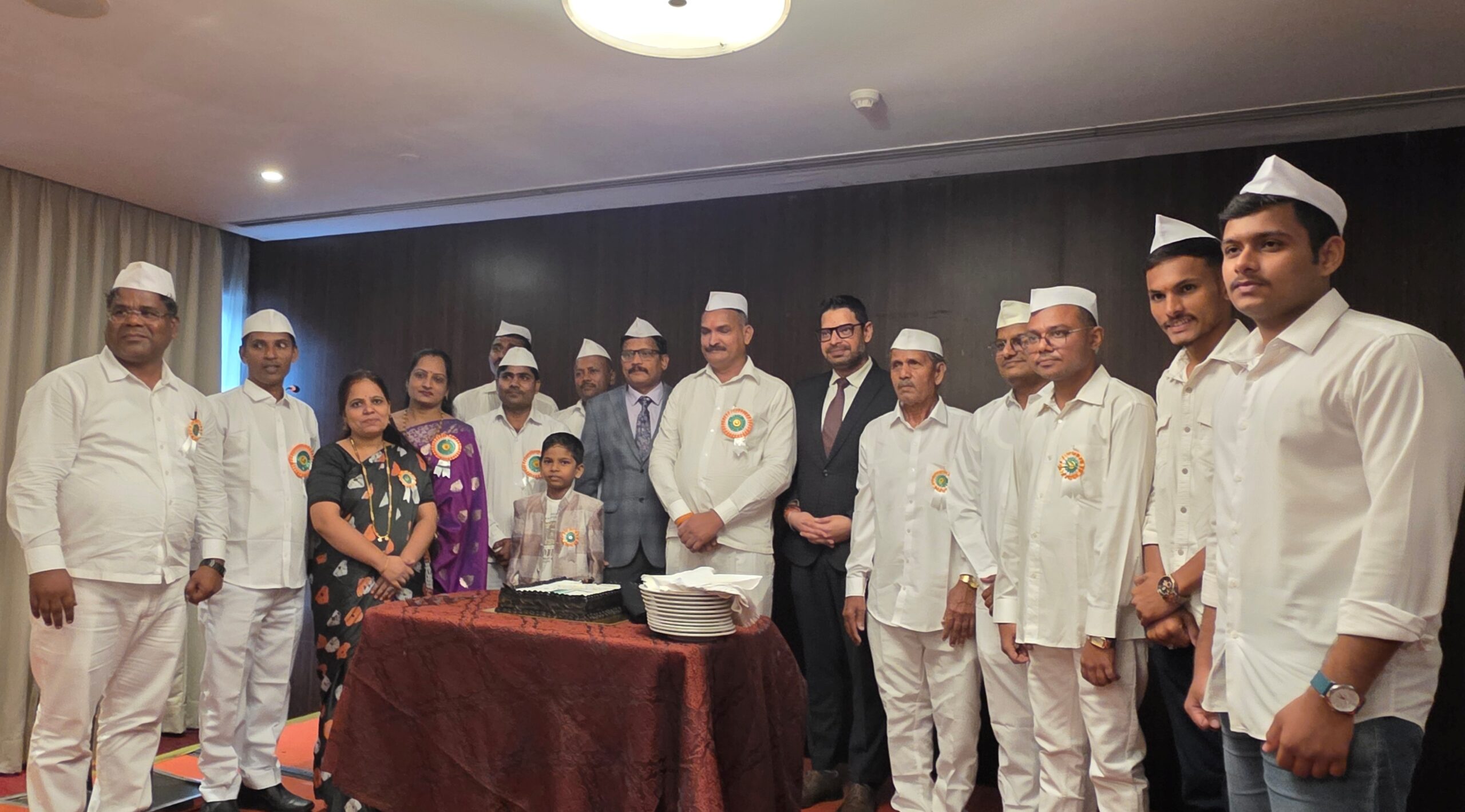
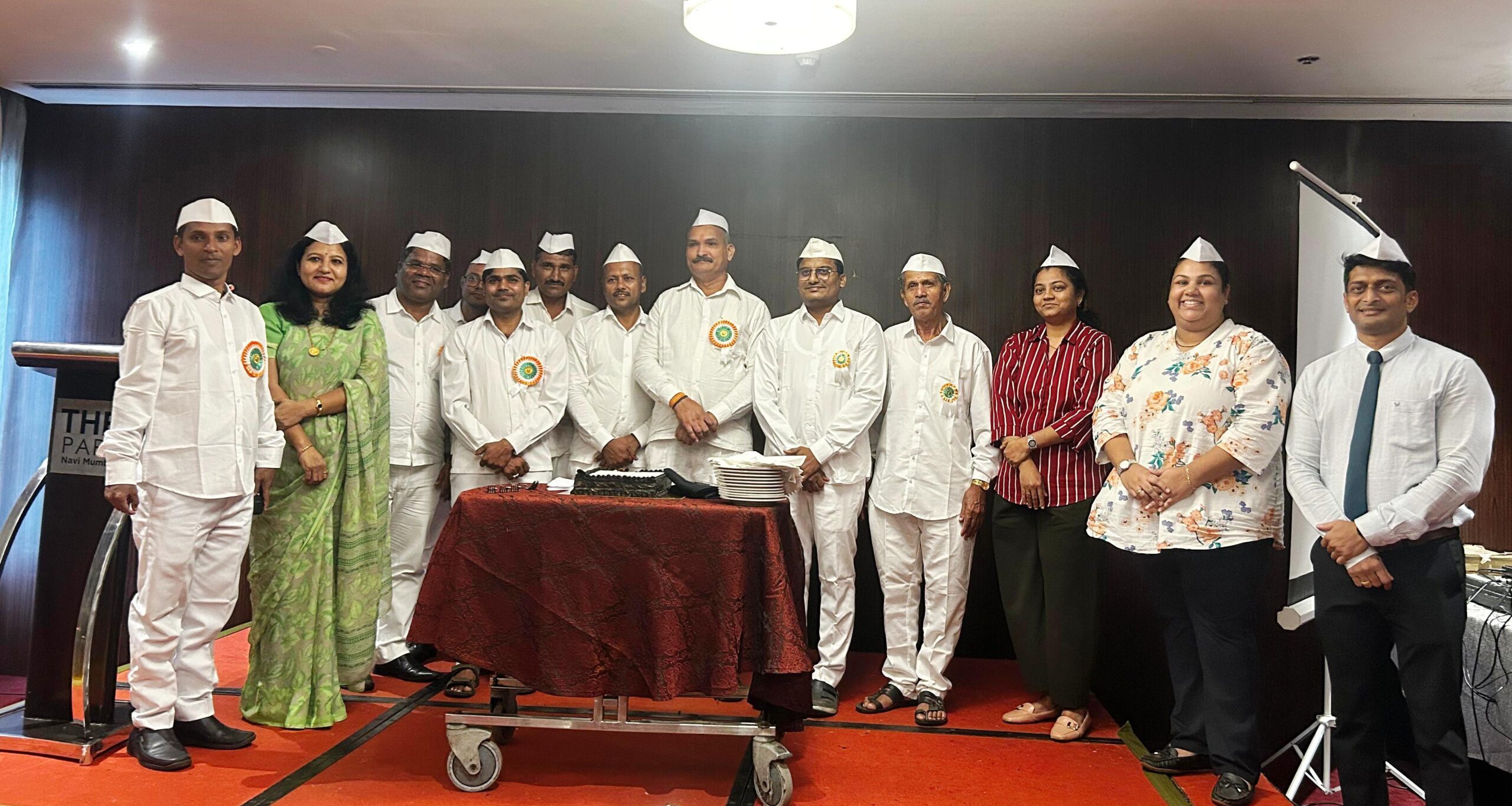
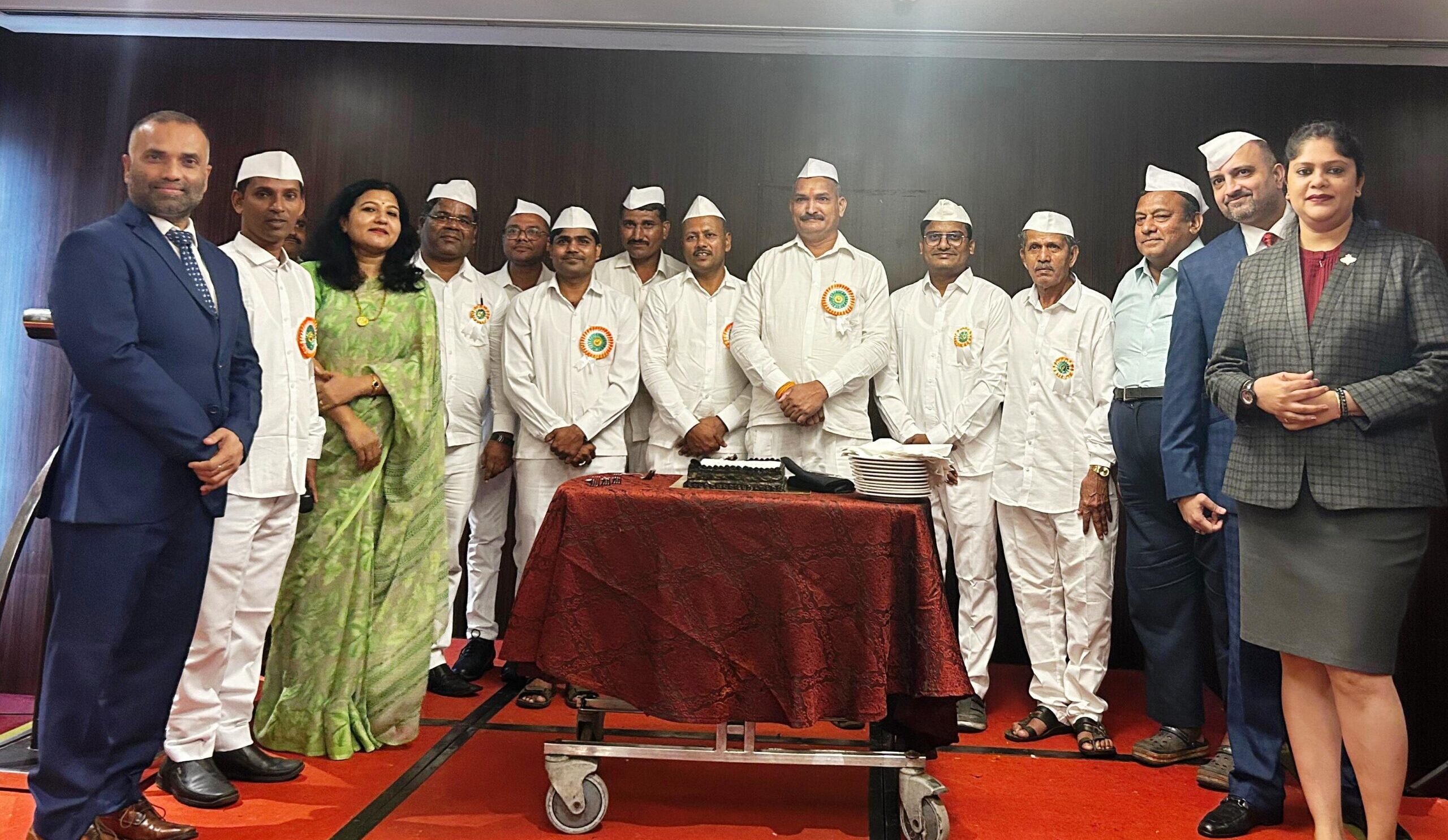
The celebration at the Apeejay Institute of Hospitality and The Park Navi Mumbai marked more than an anniversary; it was a tribute to a legacy of dedication. The event was attended by the students and staff of AIH, team of The Park Navi Mumbai and Flurys. The programme featured anniversary celebrations of Dabbawalas with inspiring stories, demonstrations of their operational methods and heartfelt reflections – reminding all present that their success is rooted in tradition, innovation, and community values.

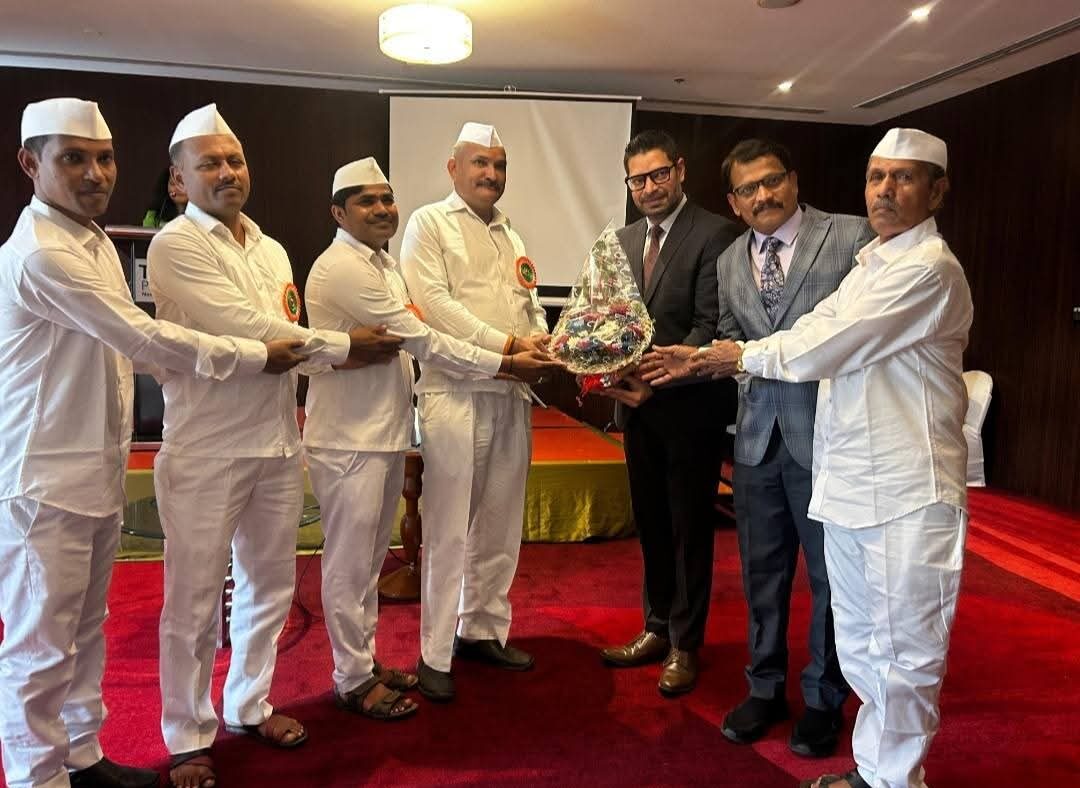
A floral tribute to welcome  the Dabbawallas to their MD and CEO who still carry out their duties of delivering dabbas,  by Mr. Rahul Makhija, General Manager, The Park Navi Mumbai and Mr. Shirish Bokde, Vice Principal, the Apeejay Institute of Hospitality. Dabbawalas delivered a powerful session highlighting their history, philosophy, business structure, functioning and growth over the years.

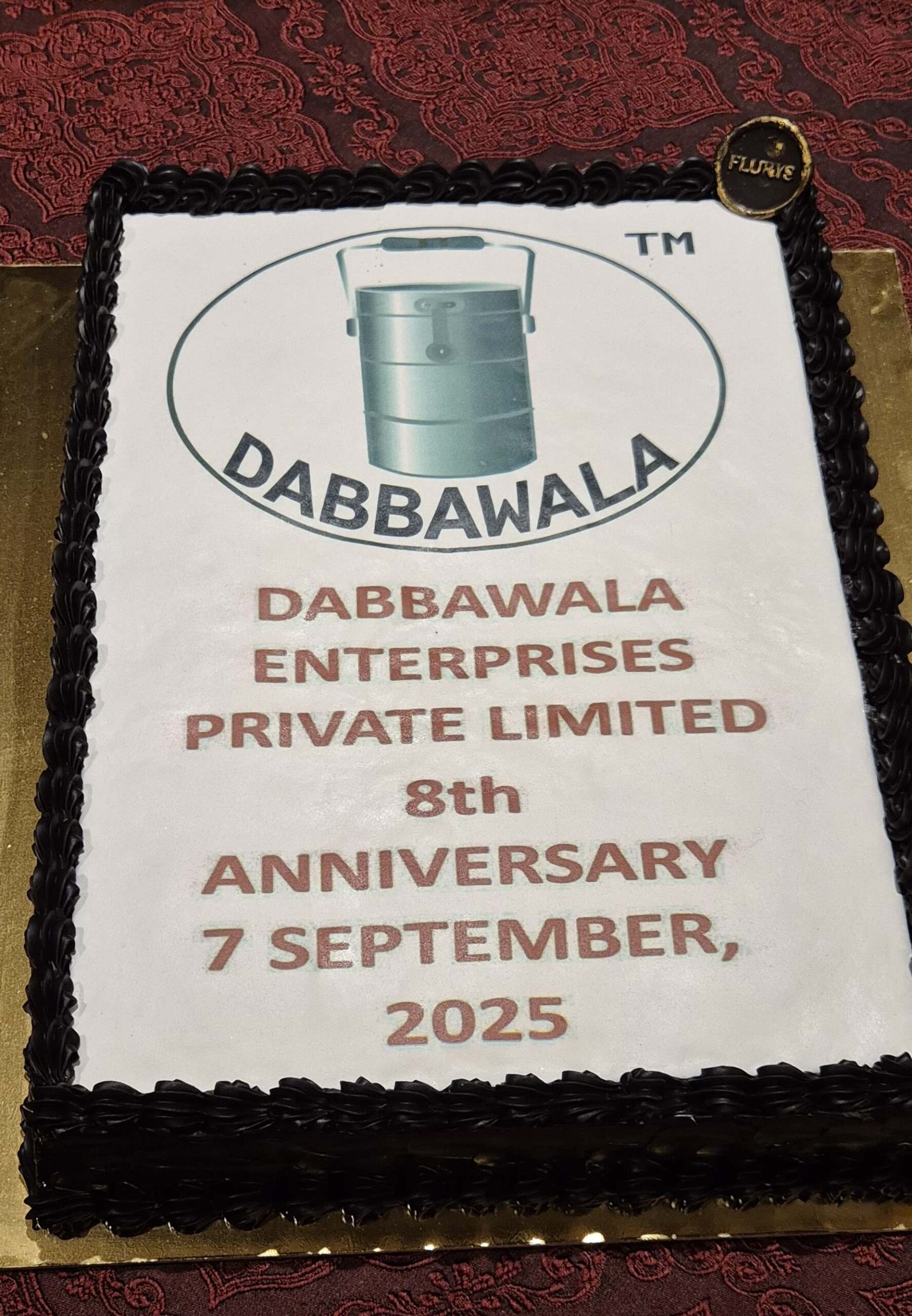
This was followed by the ceremonial cake cutting, and stories of their enduring influence on Mumbai and the world being shared over high tea. That’s when I also had a delightful conversation with the team of Dabbawallas. Got to know of the challenges they face, errors and how they were overcome and also the bond that they form with their customers. I learnt the terms like ‘Thumbs Up’ being used for the Dabbawalas as many of them were illiterate. Now they are educated up to 8th standard and some going a little beyond. It was wonderful meeting Mr. Sandeep Gaikar (MD), Sunil Gawande (CEO), Sharad More (COO), Sanjay Kumbhar (Spokesperson), Pokerkar, a very senior Dabbawala and Rupesh Thakur (Coordinator); and listening to their inspirational stories. I feel truly enriched with the interesting anecdotes and surprise elements from them.

Lessons for hospitality and logistics sectors 

Their story teaches us that true excellence in hospitality is more than processes; it’s about heart, purpose, and a commitment to serve with humility, lessons that resonate deeply within hospitality:
  • Customer centric philosophy:serving with humility and dedication, they embody the notion that ‘service is service to the divine.’
  • Punctuality and discipline:their 99.999999% on time delivery rate underscores the importance of meticulous time management.
  • Flat organizational structure:shared responsibility creates ownership and collective success.
  • Purpose driven work:pride in their craft elevates every interaction, enriching customer experiences.
  • Resilience and reliability:they deliver reliably, come rain or shine – setting a benchmark for service resilience.
  • Simplicity and trust:their low tech, manual system proves that operational excellence hinges on values and shared understanding and not on complexity.
  • Continuous learning:ongoing training and learning as an apprenticeship model ensures high standards and cultural alignment owing to their over a century legacy.

Global recognition and inspiration

Their impressive feats have attracted worldwide admiration. King Charles then Prince visited them in 2003. Sir Richard Branson experienced their service firsthand on a Mumbai train and Queen Maxima of the Netherlands engaged with their logistics marvel. Bollywood celebrities and international dignitaries have publicly celebrated their achievements elevating their status as global icons of efficient service.

A model for academic and business excellence 

The Dabbawalas are more than a Mumbai phenomenon; they are an academic case study and a blueprint for business excellence. Harvard Business School recognizes them as a ‘Six Sigma’ organization highlighting how teamwork, innovation, and customer focus explain their sustained success.

The way forward

To work towards their economic welfare, financial inclusion and safety a commercial company was established in 2017- the Dabbawala Enterprises Private Limited (DEPL) headquartered in Mumbai, the enterprise helps formalise and support the traditional Dabbawala network from a business services perspective.

DEPL represents the evolution of the Dabbawala tradition by adapting to modern business practices, exploring food processing startups, expanding to other cities may be, and tapping into organic food supply chains. This strategic shift positions the Dabbawalas not only as local legends but as growing entrepreneurs in the food and hospitality industry. The company aims to modernize the iconic lunchbox delivery system while preserving its core values and operational excellence ensuring sustainable growth and livelihoods for its members.

It was wonderful to listen to the inspiring journey of the Dabbawallas of Mumbai. I urge colleges, corporates and hospitality organizations to invite them for a truly eye opening session and lessons in true customer care.

“For the Dabbawalas, true service excellence is achieved through relentless perseverance—delivering trust, dedication, and commitment with unwavering consistency in every box.”